Progressive Jackpots: Your Real Odds of Hitting (According to EktoBet)
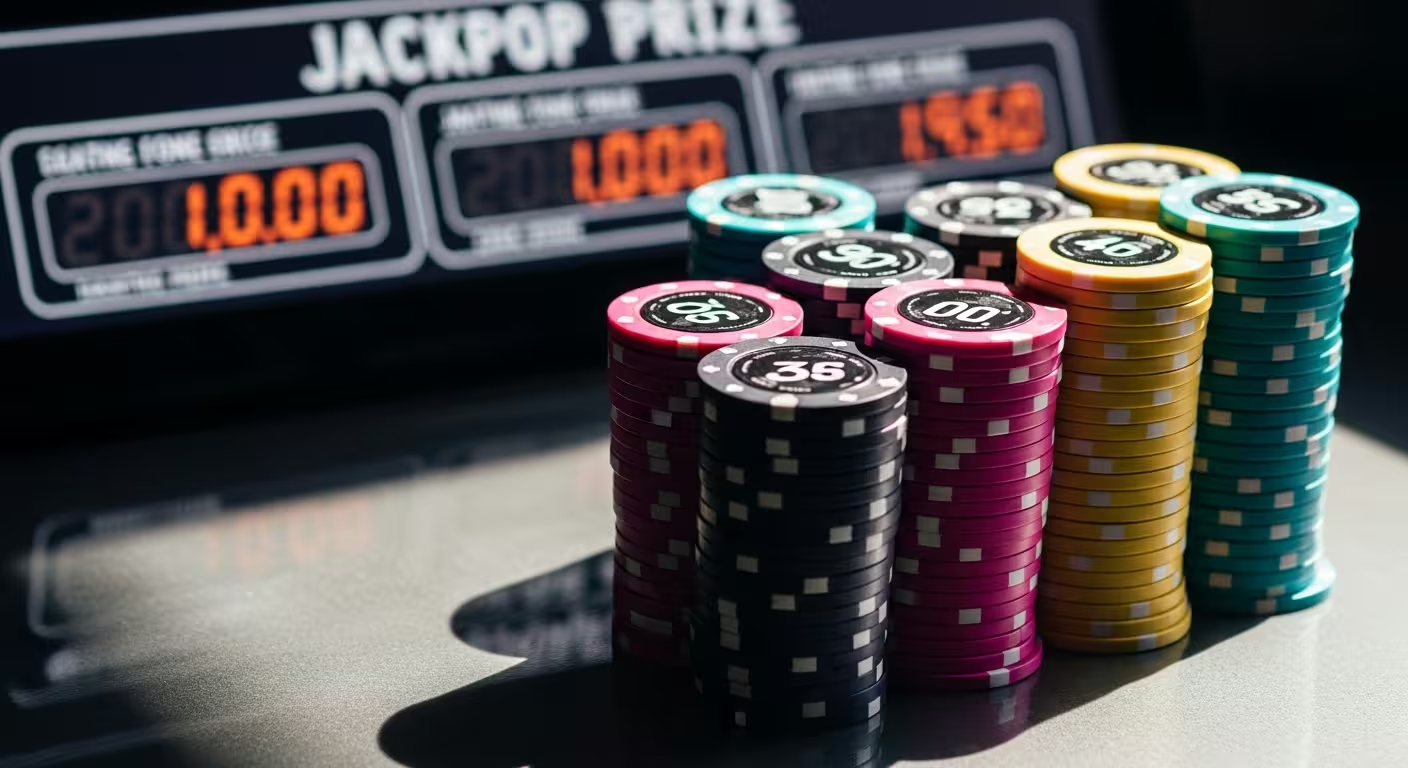
Progressive jackpots split players into two camps: those who chase the dream and those who dismiss it entirely. The truth worth knowing sits in between. A progressive jackpot grows with every bet placed across a network of machines or online slots, pooling small contributions until one spin triggers the full prize. The headline numbers are real — multi-million payouts happen every year — but so is the casino how-to math that makes each individual trigger extraordinarily rare.
At EktoBet, the progressive slots library spans standalone games and wide-area networks, meaning jackpot sizes and odds vary significantly from one title to the next. Before chasing any meter, it pays to understand exactly what your stake is buying. This guide breaks down the mechanics, the realistic odds, and the trade-offs that define progressive jackpot play.
Examples and Real-World Scenarios
The best way to understand progressive odds is to look at concrete numbers. A typical networked jackpot slot contributes between 1% and 3% of each bet to the prize pool, separate from the base game’s normal payouts. On a €1 spin, that means €0.01–€0.03 flows into the jackpot meter. To grow a prize from a standing seed of €1 million to €5 million, the network needs to process somewhere between €130 million and €400 million in total wagers.
Two jackpot structures dominate the market:
- Standalone progressives — confined to a single game or one casino. The prize grows more slowly but hits far more frequently; typical payouts range from €5,000 to €50,000.
- Wide-area networked progressives — shared across multiple sites and thousands of players. Prizes reach the millions, but the per-player trigger probability drops to match. Common estimates place the odds of hitting a top-tier networked jackpot at 1 in 50 million to 1 in 100 million spins.
Those odds are comparable to national lottery formats — a useful frame for setting expectations before a session. The jackpot is real, the payout will come to someone eventually, and no spin is ever “owed” a win.
Players at EktoBet can view live jackpot meters for all progressive titles in the lobby. That number reflects how much is currently at stake, not how soon it will drop. A larger meter means more total wagers have contributed since the last reset — nothing more.
Step-by-Step Guide
A practical casino how-to for progressive jackpot sessions covers five decisions — in order of importance.
- Choose your jackpot tier. Standalone progressives give better statistical odds and shorter wait times between wins. Wide-area jackpots offer the life-changing prize ceiling, but each spin’s chance of triggering is fractionally small. Decide which profile fits your session goals before selecting a game.
- Check the bet eligibility requirement. Many jackpot slots require a maximum bet or a dedicated side wager to qualify for the jackpot trigger. Spinning below that threshold can exclude you entirely — not just reduce your share. Review the paytable or game information panel before placing a single spin.
- Set a fixed session budget. Jackpot gameplay at high stake levels depletes a bankroll faster than standard slots. Treat the budget as an entertainment cost, the same way you would a cinema ticket. Do not extend the session beyond that limit in the hope that the jackpot is nearly ready.
- Factor in the true RTP. The jackpot contribution is deducted from the base game’s return. A slot advertising 96% RTP may deliver only 91–94% on regular spins once the jackpot seed contribution is removed. At EktoBet, each slot’s RTP details and jackpot contribution rates are disclosed in the game information panel.
- Play the session, not the meter. The jackpot meter’s current size carries zero information about when it will next trigger. Every spin is statistically independent. Focus on your fixed limit and your enjoyment of the base game, not on the number climbing at the top of the screen.
The Essentials
Progressive jackpots attach a small per-bet levy to every wager, diverting it into a central prize pool that runs separately from the base game’s paytable.
Five core mechanics determine how a progressive works:
- Seed amount — the minimum guaranteed payout at the moment a jackpot resets after a win. The casino funds the seed; it is not drawn from future players’ bets.
- Contribution rate — the percentage of each bet directed into the prize pool. Typical values sit between 1% and 3%, which is the primary reason jackpot slots return slightly less on base spins.
- Network scope — standalone (one game), local (one casino), or wide-area (multiple sites and operators). Network scale determines both growth speed and trigger rarity.
- Trigger mechanism — either random (any spin qualifies regardless of outcome) or symbol-based (a specific reel combination is required). Random triggers mean a minimum-stake spin can theoretically win the jackpot; symbol-based triggers usually require maximum bet.
- Reset cycle — once the jackpot pays, the meter returns to the seed immediately. There is no mandatory cooldown before it can be won again.
Understanding these five mechanics is the baseline of any serious casino how-to approach to progressive titles. You are buying a very small probability of a very large outcome — a genuinely asymmetric bet that suits a specific type of player, not every session. The mechanics themselves are neutral; it is how you budget around them that determines whether a progressive jackpot session is a considered choice or an expensive accident.
Pros and Cons
Progressive jackpots present a clear trade-off. The table below captures the most significant factors side by side.
| Pros | Cons |
|---|---|
| Life-changing payouts reachable from a standard stake | Base RTP is reduced by the jackpot contribution rate |
| Jackpot will eventually pay out — the prize pool is always real | Odds of hitting the top prize are effectively lottery-grade |
| Live jackpot meters create shared, community-style excitement | Maximum bet requirements can accelerate bankroll loss |
| Tiered jackpots distribute wins across mini, midi, and major prize levels | Prize timing is entirely unpredictable — no guaranteed timeline |
For most EktoBet sessions, the question is not whether progressives are worth it in expected-value terms — they rarely are at the moment you sit down. The question is whether the excitement of a remote life-changing outcome justifies playing at a slightly lower base RTP. Players who enjoy that compressed aspiration get genuine value from it; players who prefer predictable session performance are usually better served by standard high-RTP slots.
Every progressive slot at EktoBet comes with a disclosed contribution rate and trigger documentation in the game info panel. Comparing that rate against the game’s base RTP before your first spin takes under a minute and tells you exactly what trade-off you are accepting.
Key Takeaways
Keep these points in mind before your next progressive jackpot session:
- Jackpot odds are lottery-grade. Top-tier wide-area networked jackpots commonly fall between 1-in-50-million and 1-in-100-million per spin. Plan your bankroll with that in mind.
- Base RTP is reduced by the contribution. Expect 2–5 percentage points less on routine wins compared to an equivalent non-jackpot slot. That gap funds the jackpot prize pool.
- Bet eligibility is binary, not graduated. Either your stake qualifies for the jackpot trigger or it does not. Confirm the minimum qualifying bet before spinning.
- No jackpot is ever overdue. A large meter simply means a lot of money has been contributed since the last reset. Each spin’s probability of winning is unchanged.
- Tiered jackpots distribute wins more broadly. Games offering mini, midi, major, and mega tiers make the smaller prizes relatively frequent, which maintains engagement even when the top prize takes months to hit.
EktoBet publishes jackpot contribution rates and trigger conditions in each game’s information panel — the first stop for any sound casino how-to research before a session.